

Why Cybersecurity Must Be a Boardroom Priority
June 26, 2026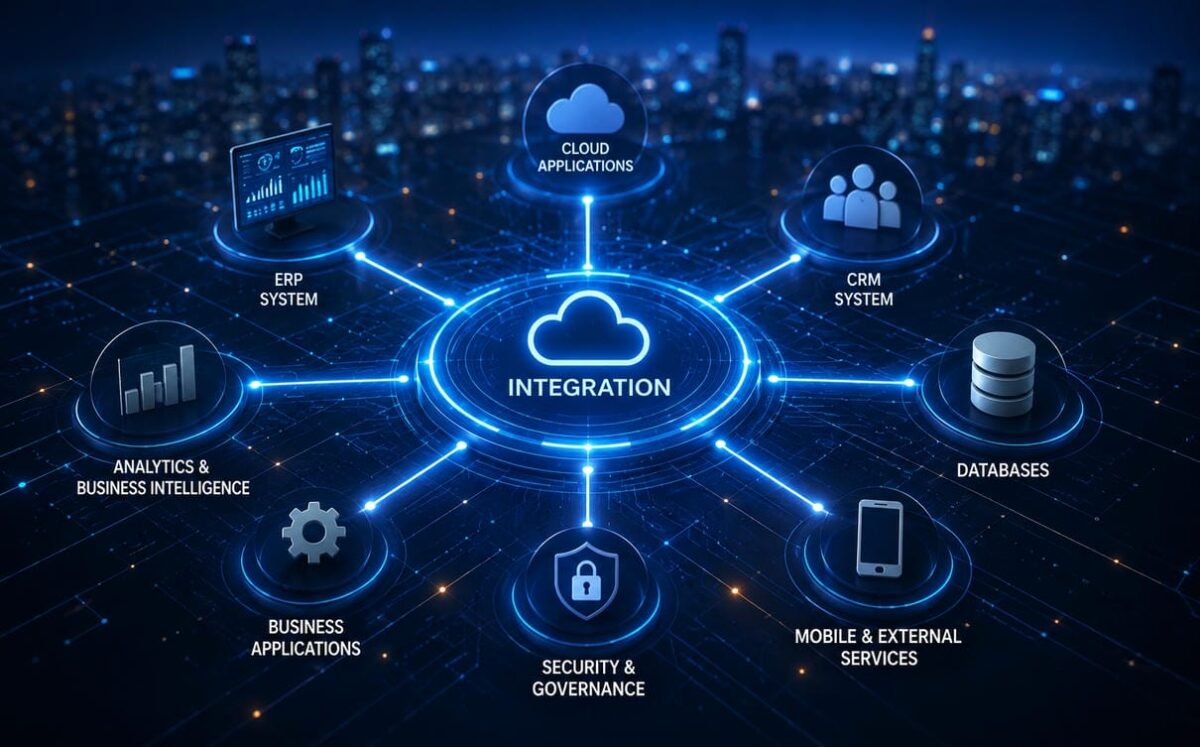
Enterprise Integration: Connecting Business Without Complexity
Why Modern Organisations Need Seamless Technology Integration
As organisations adopt new technologies to improve efficiency and support growth, many find themselves managing an increasingly complex digital environment. Enterprise Resource Planning (ERP) systems, Customer Relationship Management (CRM) platforms, cloud applications, financial software, business intelligence tools, and industry-specific solutions all play important roles—but they often operate in isolation.
When critical business systems fail to communicate effectively, organisations experience duplicated effort, inconsistent data, slower decision-making, and unnecessary operational costs.
Enterprise Integration addresses these challenges by connecting systems, applications, and data into a unified technology ecosystem that enables information to flow securely and efficiently across the organisation.
The Challenge of Disconnected Systems
Many businesses have invested heavily in technology over the years. As new platforms were introduced to meet changing business requirements, they were often implemented independently, resulting in fragmented technology environments.
Common challenges include:
- Duplicate data across multiple systems
- Manual data entry
- Reporting inconsistencies
- Delayed business processes
- Increased operational costs
- Poor customer experience
- Limited visibility across departments
These issues reduce productivity and prevent organisations from making timely, informed business decisions.
What Is Enterprise Integration?
Enterprise Integration is the process of connecting business applications, databases, cloud platforms, and digital services so they operate as one coordinated environment.
Rather than replacing existing technology investments, integration allows organisations to maximise the value of their current systems while improving efficiency and data accuracy.
Modern integration solutions may include:
- API Integration
- ERP Integration
- CRM Integration
- Cloud Integration
- Data Synchronisation
- Middleware Platforms
- Business Process Automation
- Enterprise Service Bus (ESB)
The goal is simple: ensure the right information reaches the right people at the right time.
The Business Benefits of Integration
Successful enterprise integration delivers measurable business value across the organisation.
Improved Operational Efficiency
Automated information sharing removes repetitive manual tasks and accelerates business processes.
Better Decision-Making
Integrated systems provide consistent, real-time data that enables faster and more informed decisions.
Enhanced Customer Experience
Connected systems improve response times, reduce errors, and provide employees with a complete view of customer interactions.
Increased Agility
Organisations can adopt new technologies more quickly without disrupting existing business operations.
Lower Operating Costs
Reducing manual work, duplicate systems, and inefficient processes leads to significant long-term cost savings.
Cloud Integration Is Driving Digital Transformation
As organisations continue migrating workloads to cloud platforms, integration has become more important than ever.
Modern businesses commonly operate across hybrid environments that combine on-premises infrastructure with cloud-based services such as Microsoft 365, Azure, AWS, Salesforce, SAP, Oracle, and numerous specialised business applications.
Effective cloud integration ensures these platforms operate seamlessly together while maintaining security, governance, and performance.
Integration Supports Business Growth
Technology should enable business growth—not restrict it.
As organisations expand, they introduce new applications, business units, customers, suppliers, and digital services. Without an effective integration strategy, complexity increases rapidly.
A well-designed integration architecture provides the flexibility needed to support future growth while protecting existing technology investments.
Scalable integration also enables organisations to adopt emerging technologies such as Artificial Intelligence, advanced analytics, automation, and IoT solutions more effectively.
Security and Governance Matter
Enterprise integration must never compromise security.
Modern integration strategies incorporate:
- Secure API management
- Identity and Access Management
- Encryption
- Data governance
- Audit logging
- Compliance monitoring
Protecting sensitive business information remains a critical component of every successful integration project.
Choosing the Right Integration Partner
Successful integration requires more than connecting software applications.
It requires a clear understanding of business processes, technology architecture, security, scalability, and long-term operational requirements.
Experienced integration specialists help organisations design solutions that support both immediate operational improvements and future digital transformation initiatives.
Conclusion
Enterprise Integration enables organisations to unlock greater value from their existing technology investments while creating a connected, agile, and efficient digital environment.
Rather than allowing disconnected systems to slow business growth, organisations can build a modern technology ecosystem that supports collaboration, automation, and informed decision-making.
At NKS Capital, we design and implement enterprise integration solutions that connect people, processes, and technology. Our specialists help organisations simplify complexity, improve operational efficiency, and create scalable digital platforms that support long-term business success.
Ready to Connect Your Business Systems?
Whether you’re integrating cloud platforms, connecting enterprise applications, or modernising legacy infrastructure, NKS Capital can help you build a secure, scalable integration strategy that supports your business goals.
Contact our team today to discuss your enterprise integration requirements.